A summary of Changes in Temporal Lobe Alpha Activity after a Single Brainspotting Session by Santiago Brand, BCB, QEEGDL.
Summary by Paola Abicic, with the original research by Santiago Brand.
This case study attached demonstrates measurable electrophysiological changes in the brain following a single 45-minute session of Brainspotting, a neuroexperiential (mind-body connection) therapy developed by Dr. David Grand.
By utilizing EEG and qEEG tracking, the article provides objective, physical evidence of how the brain processes emotional trauma, moving beyond traditional symptomatology.
Key Takeaways
The Intervention: Brainspotting uses specific eye positions ("brainspots") to access unresolved emotional, somatic, and subcortical material (structures beneath the thinking brain) that traditional talk therapy often cannot reach.
The EEG Findings: Before the session, the patient showed elevated, dysregulated alpha activity in the temporal lobes—regions tied to emotional processing and threat detection—indicating cortical inefficiency and emotional suppression. After the session, the EEG revealed normalized alpha activity, cleaner spectral profiles, and improved rhythmic organization.
Neurophysiological Mechanisms: The observed shifts suggest that Brainspotting helps the nervous system get "unstuck" by reducing limbic system overload, restoring autonomic nervous system flexibility, and improving overall cortical efficiency.
Clinical Significance: While a single session does not constitute a "cure," the findings suggest that meaningful neurophysiological shifts can occur rapidly. The article argues for a broader shift in mental health care toward objectively measuring functional brain dynamics and cortical activity.
Limitations & Next Steps: The author notes that further research, longitudinal tracking, and repeated measures across multiple sessions are required to prove if these neurological changes become permanent over time.
What is Brainspotting?
Brainspotting is a specialized, neuroexperiential (mind-body connection) therapy that focuses on processing emotional trauma, anxiety, and somatic stress by utilizing the patient's field of vision.
Developed by Dr. David Grand, the core premise of Brainspotting is that
"where you look affects how you feel.”
During a session, I invite a client to identify specific eye positions, known as brainspots using a pointer that trigger or connect to deep-seated emotional or physical distress. The client also listens to bilateral beat music to help both hemispheres of the brain integrate the experience.
Unlike traditional talk therapies that focus heavily on conscious verbal processing in the cortex (the brain’s outer, thinking layer), Brainspotting is designed to bypass the analytical mind.
It directly accesses the subcortical brain (including the limbic system and autonomic nervous system), allowing the brain and body to process and release unresolved trauma, emotional memory, and physical tension from the inside out.
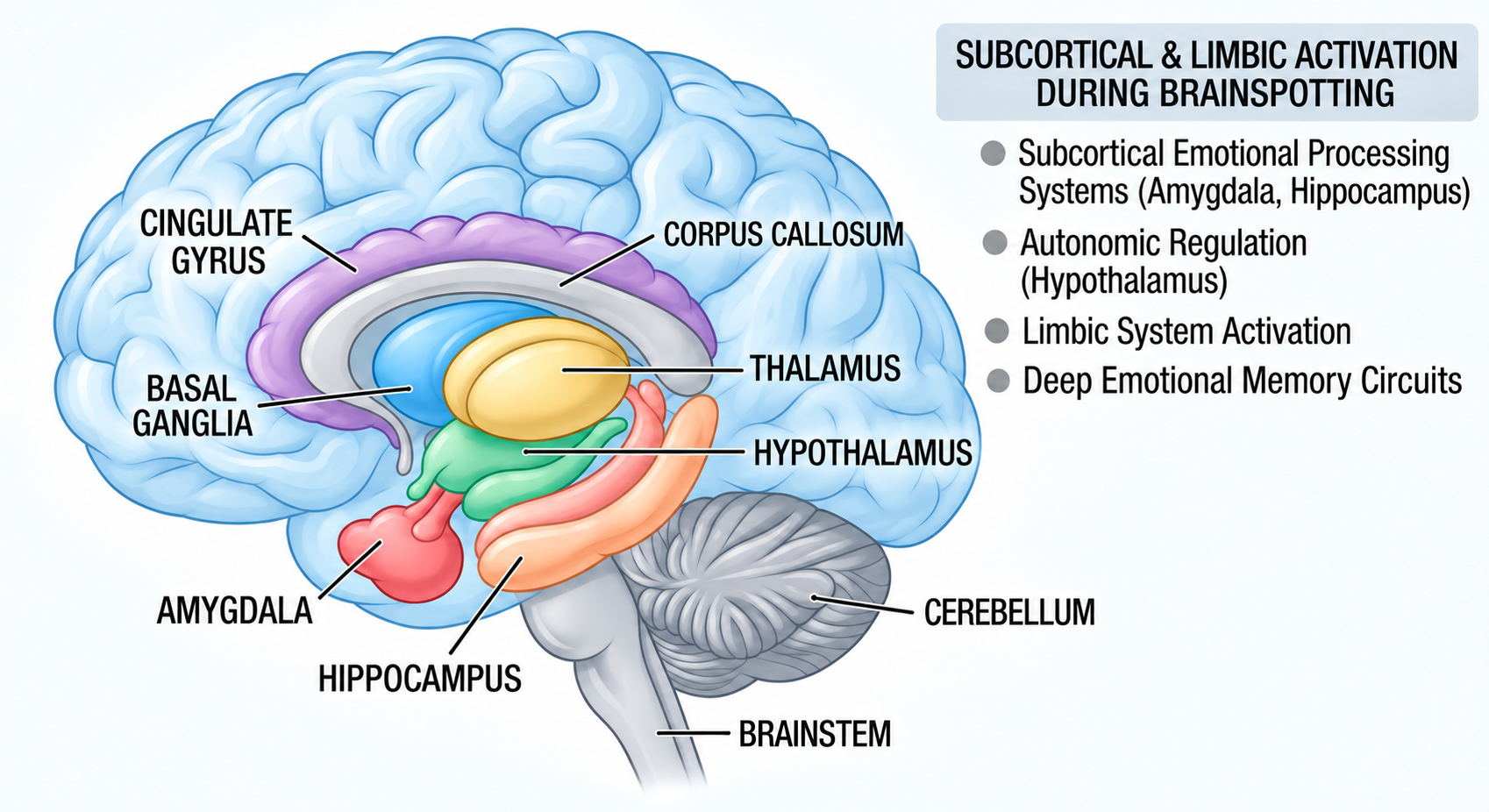
Brain regions engaged during Brainspotting
What’s the difference between Eye Movement Desensitization and Reprocessing (EMDR) and Brainspotting?
EMDR uses repetitive bilateral stimulation (such as rapid, side-to-side eye movements) to reprocess traumatic memories while keeping the client actively engaged in a structured, multi-step cognitive protocol. In contrast, Brainspotting relies on a fixed, stationary gaze to target a specific eye position that directly connects to subcortical distress, allowing for a more fluid and less verbally structured processing experience.
Brainspotting is one of the approaches I use in somatic therapy, often alongside yoga therapy and other body-based work. If you’re curious whether it might be a fit for you, I offer a free 15-minute consultation.